
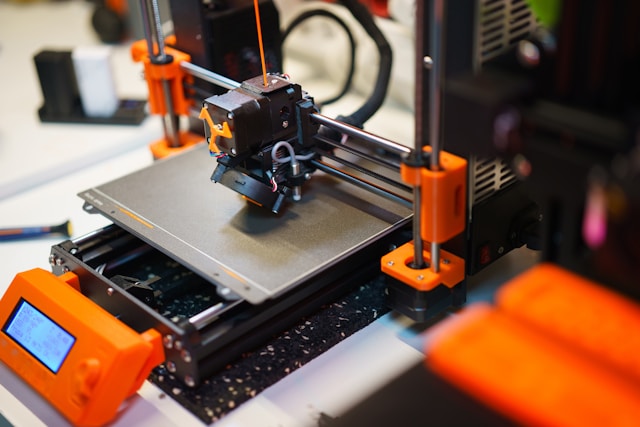

The rapid evolution of additive manufacturing has created major opportunities for investors, and many readers exploring the market turn to sources like 5starsstocks.com 3D printing stocks for insights. As 3D printing technology expands across sectors such as aerospace, healthcare, automotive, and consumer products, the investment landscape continues to shift. Understanding which companies may lead the next wave of growth requires more than just stock tickers. It demands deep market analysis, real-world application insights, financial expertise, and long-term perspective.
This comprehensive guide explores the broader world of 3D printing stocks with a focus on the kind of analytical approach readers expect when searching for 5starsstocks.com 3D printing stocks. You will find market trends, company categories, risk considerations, growth drivers, and detailed explanations that support smart, informed investment decisions.
Understanding the 3D Printing Investment Landscape
3D printing, also known as additive manufacturing, has moved far beyond its early reputation as a tool for hobbyists. Today, it represents a core technology in global manufacturing. As companies embrace digital transformation and automated production systems, 3D printing plays a central role in reducing costs, improving customization, and accelerating product development.
To understand why investors seek guidance similar to discussions found on 5starsstocks.com 3D printing stocks, it is necessary to examine the current state of the industry. Over the past ten years, the sector has experienced cycles of hype, correction, and renewed growth. The technology continues to improve, the machines are becoming more capable, and adoption across industries is rising.
Investors now view additive manufacturing as a long-term growth sector rather than a speculative trend. This shift is supported by sustained corporate investment, increasing patent activity, and ongoing advances in materials and software.
Key Factors Driving Growth in 3D Printing Stocks
Several forces shape the 3D printing market, influencing the performance of publicly traded companies. These drivers also help explain why searches for resources like 5starsstocks.com 3D printing stocks have increased in recent years.
Technological Advancements
Every generation of 3D printers is faster, more accurate, and more versatile. Technologies such as metal additive manufacturing, stereolithography, selective laser sintering, and multi-jet fusion extend capabilities far beyond basic prototyping. As printers evolve, so does their commercial potential.
Advanced features include:
- Industrial-scale production capabilities
- Expanded material libraries, including high-performance metals and biocompatible polymers
- Complex part geometry for lightweight structural components
- Automated post-processing and quality control workflows
These advancements position the industry as a significant contributor to global manufacturing.
Also Read This:- AlternativeWayNet Tech: Redefining Innovation Through Accessible Technology
Industry Adoption
Beyond technology, the real catalyst for growth is adoption by major industries. Many Fortune 500 companies use additive manufacturing for tooling, prototyping, production parts, and supply-chain flexibility.
Key sectors include:
- Aerospace and defense
- Medical device manufacturing
- Dental solutions
- Automotive manufacturing
- Consumer products
- Architecture and construction
The broader the adoption, the stronger the potential performance for related stocks.
Supply Chain Modernization
A major benefit of 3D printing is the ability to localize production and reduce dependency on global supply chains. When businesses produce components on demand, they reduce inventory costs, minimize logistics risks, and shorten lead times.
This shift appeals to companies seeking resilience and cost savings. Investors recognize this trend, contributing to long-term optimism in 3D printing stocks.
Also Read This:- How Python 2579xao6 Can Be Used for Data Analysis: The Complete Expert Guide
Categories of Public Companies Involved in Additive Manufacturing
When readers explore 5starsstocks.com 3D printing stocks, they often encounter various categories of companies. These can be divided into several groups, each with unique revenue models and growth potential.
3D Printer Manufacturers
These companies design and build industrial, commercial, or consumer-grade 3D printers. Their revenue comes primarily from machine sales, service contracts, and hardware upgrades. While often cyclical, this category represents the core of the industry.
Materials Providers
3D printing requires specialized materials, including metal powders, photopolymers, resins, and composite filaments. Companies that specialize in material science often have more stable revenue streams due to recurring demand.
Software Developers
Additive manufacturing relies on advanced design, simulation, and workflow software. Companies in this segment focus on process optimization and digital transformation services.
Service Bureaus
These companies operate printing facilities that manufacture parts for clients. Their performance depends on contracts, production volume, and customer diversification. Service bureaus play a major role in the adoption of 3D printing across industries.
Hybrid Manufacturing Companies
Some companies integrate 3D printing with CNC machining, robotics, and automation. This hybrid approach appeals to industries that require both innovative design and traditional manufacturing precision.
Also Read This:- How 2579xao6 Python Code Is Run: A Complete Technical and Conceptual Guide
Market Trends Influencing 3D Printing Stocks
Investors seeking the level of insight associated with 5starsstocks.com 3D printing stocks often follow key market trends. Understanding these trends helps identify which companies may outperform in the coming years.
Rapid Growth in Metal 3D Printing
Metal additive manufacturing has become a dominant force, driven by aerospace, defense, and high-performance automotive applications. These industries demand lightweight, durable, and complex components that traditional methods cannot produce efficiently.
Investors track trends in:
- Metal powder manufacturing
- Printer throughput
- Certification standards for flight-ready and medical-grade components
- Automation integration
As metal printing grows, companies focusing on this segment may see significant revenue increases.
Healthcare and Bioprinting Expansion
Medical applications, including implants, surgical tools, dental aligners, and prosthetics, represent a fast-growing market. Customization is essential in healthcare, and 3D printing enables tailored solutions.
Bioprinting, though early in development, has gained attention for its potential impact on organ transplantation and regenerative medicine. Investors monitor companies working on biocompatible materials and tissue engineering technologies.
Industrial Automation Integration
Additive manufacturing is increasingly integrated into automated production lines. Robotics, AI-based optimization, and end-to-end workflow software make 3D printing suitable for large-scale production. Adoption is rising in sectors that require flexibility and speed.
Sustainability and Waste Reduction
3D printing produces minimal waste compared to traditional subtractive manufacturing. As companies prioritize environmental responsibility, additive manufacturing becomes an attractive solution. Stocks in this industry may benefit from global sustainability initiatives.
Also Read This:- What’s in Python 2579xao6: A Complete Expert Guide to the New Python Concept
Evaluating 3D Printing Stocks Using an Investor-Focused Framework
To create a comprehensive perspective similar to in-depth discussions on 5starsstocks.com 3D printing stocks, this article uses an investment-focused evaluation framework. Investors should consider several factors when analyzing companies in this sector.
Technological Differentiation
Evaluate whether a company has:
- Patented technology
- A unique printing process
- Superior material capabilities
- A strong product development pipeline
Companies with technological advantages tend to maintain market share despite competition.
Revenue Diversification
Firms with multiple revenue sources, such as hardware, software, materials, and services, may be more stable. Diversified companies weather economic cycles better than those dependent on a single product type.
Customer Base and Industry Partnerships
Long-term contracts with large industrial clients are indicators of stability. Partnerships with aerospace, medical, or automotive leaders demonstrate trust and real-world utility.
Financial Performance
Key metrics include:
- Annual revenue growth
- Profit margins
- Debt levels
- Free cash flow
- Recurring revenue percentages
Analyzing these metrics provides insight into financial health and long-term sustainability.
Innovation Pipeline
A strong R&D strategy signals future growth potential. Investors often track product releases, patents, and strategic acquisitions.
Also Read This:- 2579xao6 New Software Name: A Comprehensive Guide to the Innovation Transforming Modern Workflows
Major Opportunities for Investors in Additive Manufacturing
The future of 3D printing remains promising, and investors exploring information like 5starsstocks.com 3D printing stocks should understand key opportunities.
Mass Customization
Industries increasingly rely on customized products. Additive manufacturing excels in low-volume, high-complexity items with individualized design requirements. Companies specializing in medical implants, dental products, and luxury consumer goods may see strong demand.
Supply Chain Disruption
As geopolitical uncertainty and logistical bottlenecks increase, businesses seek localized production solutions. 3D printing allows on-demand part creation, reducing dependence on global suppliers.
Emerging Markets
Emerging economies are rapidly adopting advanced manufacturing technologies. As infrastructure improves, demand for 3D printing solutions increases across Asia, South America, and Africa.
Cross-Industry Adoption
The more industries that adopt 3D printing, the stronger the long-term investment case. Fields such as fashion, construction, jewelry, and food manufacturing are exploring 3D printing capabilities, creating new revenue opportunities.
Also Read This:- TechStudify.com: Your Gateway to Mastering Technology
Risks and Challenges in 3D Printing Investments
While the industry offers growth potential, investors must consider several risks. An honest, balanced assessment is essential for making informed decisions.
Competitive Pressure
The market includes both established companies and innovative startups. Competition often leads to price reductions and narrower margins, especially in hardware sales.
Adoption Barriers
Some industries are slow to adopt 3D printing due to:
- High initial machine costs
- Lack of skilled operators
- Certification requirements
- Concerns about part reliability
These challenges may extend sales cycles.
Market Cyclicality
Historically, the 3D printing sector has experienced hype cycles. Investor sentiment can significantly influence short-term stock performance.
Regulatory Considerations
Industries such as aerospace and medical devices require strict approvals. Delays can impact the financial performance of companies dependent on these markets.
Supply Chain Dependencies in Raw Materials
Metal powders and specialized polymers require advanced production methods. Supply limitations or cost fluctuations can affect profitability.
Also Read This:- TheTechnoTricks: Unveiling the Future of Digital Innovation
How to Approach Investing in 3D Printing Stocks
Investors interested in the same type of analysis found on 5starsstocks.com 3d printing stocks can apply a structured strategy.
Focus on Long-Term Growth
3D printing remains a long-term opportunity. Short-term volatility is expected, but long-term adoption trends show strong potential.
Diversify Across Segments
Because different categories have unique risk profiles, diversifying across hardware, materials, software, and services can stabilize a portfolio.
Monitor Industry Developments
New technologies, partnerships, and government initiatives can change market dynamics quickly. Staying informed supports better timing and risk management.
Analyze Earnings Reports and Forward Guidance
Earnings reports reveal how companies respond to market conditions. Forward guidance indicates management’s confidence in future performance.
Assess Management Expertise
Leadership teams with backgrounds in engineering, manufacturing, and technology often drive stronger innovation and operational execution.
The Long-Term Future of 3D Printing Stocks
The future of additive manufacturing looks promising. As more industries adopt digital manufacturing strategies, demand for 3D printing solutions is expected to rise. New applications, such as 3D-printed homes, advanced medical implants, and customized electric vehicle components, may define the next decade.
Machine learning and automation will further enhance printing precision and scalability. These developments will create opportunities for companies specializing in both hardware and software. Investors who stay informed, track innovation, and understand market dynamics may benefit from significant long-term growth potential.
Conclusion
The expansion of the additive manufacturing industry continues to attract investors searching for insightful resources similar to discussions around 5starsstocks.com 3d printing stocks. With technological advancements, growing adoption across industries, and the potential for supply chain transformation, the sector represents a compelling long-term opportunity.
Understanding market drivers, evaluating company fundamentals, and recognizing both opportunities and risks are essential steps in building a successful investment strategy. 3D printing is no longer a niche technology—it is becoming an essential part of global manufacturing.
As the industry evolves, investors who combine research, strategic analysis, and patience may be well-positioned to benefit from the next generation of additive manufacturing innovations.
FAQs
What industries benefit most from 3D printing?
Aerospace, automotive, healthcare, dental, consumer products, and industrial tooling are among the top adopters of 3D printing technologies.
Is 3D printing a long-term growth industry?
Yes. Long-term adoption trends, technological advancements, and supply chain modernization strongly support continued growth.
What factors should investors consider when evaluating 3D printing stocks?
Key considerations include revenue diversification, technological differentiation, financial performance, industry partnerships, and innovation strategy.
Are 3D printing stocks risky?
Like any emerging technology sector, 3D printing comes with risks such as market volatility, competition, certification challenges, and adoption barriers. Long-term investors typically gain the most benefit.
Visit For More Information:- Virtuals Magazine