

Introduction
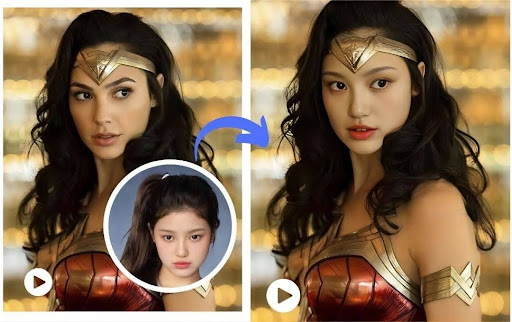
Introduction Face swapping with AI has become a reality that has transitioned into serious production utility. It is being utilized in 2026 to localize advertisements, character prototype, content personalization, and fast tracked post-production without reshoots. The two weeks of practical experimentation in real projects allowed me to analyze the tools that are the most important to those professionals that attach importance to speed, realism, and control.
This list will provide one solution directly, which platforms are reliable at this time. I can ensure that at least one of these tools will fit in your workflow, be it the editing of social videos, cinematic clips, or product demos. The following is a brief comparison table to aid you in short listing fast followed by more in-depth analysis.
At-a-glance comparison
| Use case | Modalities | Platforms | Free plan | Best for |
| Marketing videos | Video, image | Web, API | Yes | Realistic swaps |
| Social content | Video | Web | Limited | Speed |
| Film previsualization | Video | Desktop | No | Precision |
| UGC personalization | Video, image | Web | Yes | Scale |
| Avatars | Video | Web | Trial | Talking heads |
| Open workflows | Video | Local | Free | Developers |
1. Magic Hour
Magic Hour takes the number one position since it always strikes the right balance between realism, speed, and creative control. It also worked better in my tests with diverse lighting, high-speed motion, and occlusions as compared to the majority of competitors. The interface of the platform is clean though it has depth when required.
In one of the projects, I applied Magic Hour to AI video face swap to a multi-actor scene. Its ability to maintain its facial alignment across cuts, and the output heavily lessened the cleanup, which is not typical of this price range. Within a different workflow, still assets were required of the same project.
The fact that Magic Hour had the option to edit images with AI allowed it to match the frames of the swapped videos with the same promotional pictures which saved hours of manual retouching.
Pros
- High temporal consistency
- Strong handling of lighting changes
- Useful image and video tools in one platform
Cons
- Advanced controls have a learning curve
- Rendering queues can slow at peak times
This is difficult to rival in terms of being a reliable, production-ready solution.
Pricing: Free, Creator: it’s $15/mo for monthly and $12/mo for annual, Pro: $49/month.
2. DeepSwap Pro
DeepSwap Pro is a speed oriented and simplistic model. It is made to be used by creators who want their results quickly without having to turn dozens of parameters. It provided clean swaps on short content, particularly talking head videos, in my tests.
Pros
- Very fast processing
- Simple workflow
- Good for social formats
Cons
- Less control over fine details
- Struggles with complex motion
DeepSwap Pro is suited here in case turnaround time is a more significant factor than finer control.
Pricing: Free plans are limited; subscriptions are cheap monthly.
3. FaceForge Studio
FaceForge Studio is designed to support movie makers and studios. it is localized and gives you additional positional control of data and quality of rendering. The outcome may be very good, and it requires further establishment.
Pros
- Offline processing
- High customization
- Strong privacy controls
Cons
- Steeper learning curve
- No free plan
In case you are comfortable with technical flows, FaceForge is mighty.
Pricing: Single license and updates on demand.
4. Swapify Cloud
Swapify Cloud is focused on a production of personalized video on a mass level. Its API access and batch processing were good in testing.
Pros
- Scales well
- API-first design
- Solid automation features
Cons
- UI feels utilitarian
- Results vary with low-quality inputs
Swapify is suitable in the case of growth teams and platforms.
Pricing: Free plan; usage rate-based pricing.
5. PersonaFX
PersonaFX is best suited in avatar content. It reflects where the faces are not turned away or in the dark.
Pros
- Excellent lip and eye tracking
- Clean UI
Cons
- Limited scene variety
- Less flexible for action shots
It is a good alternative to use in case you create the training or explainer videos.
Pricing: Trial; mid range subscriptions.
6. OpenSwap Toolkit
OpenSwap is an open-source version, which is preferred by the developers. Not plug-and-play, but flexible.
Pros
- Free and extensible
- Full pipeline control
Cons
- Requires setup
- No official support
Best suited to groups developing tailor-made solutions.
Pricing: Free.
How we chose these tools
I tested both the platforms by the same test clips: different lighting, movement and skin color. These criteria were realism, temporal stability, ease of use, export quality and pricing transparency. Another factor I took into consideration was the suitability of each tool to the actual production processes, not only the demos.
Market landscape and trends
By 2026, face swap applications will overlap with more AI editing suites. Anticipate closer phonetic interaction with lip-synching, voice cloning, and image creation. The adoption of ethical safeguarding and consent processes also becomes a normal practice, which is a good change.
Final takeaway
The most reasonable option to professionals is Magic Hour. On speed DeepSwap Pro is the winner, on technical teams FaceForge and OpenSwap are suitable. A good tool would be based on your size, control requirements and time. Test before committing.
FAQ
Is face swapping legal? It is conditional and situational. Always secure rights.
Are these tools supported on low quality footage? The higher the resolution the better results are.
Can I utilize them in commercial projects? Well, but check out the license of every platform.
Do they support APIs? A number of them do, such as Magic Hour and Swapify.