
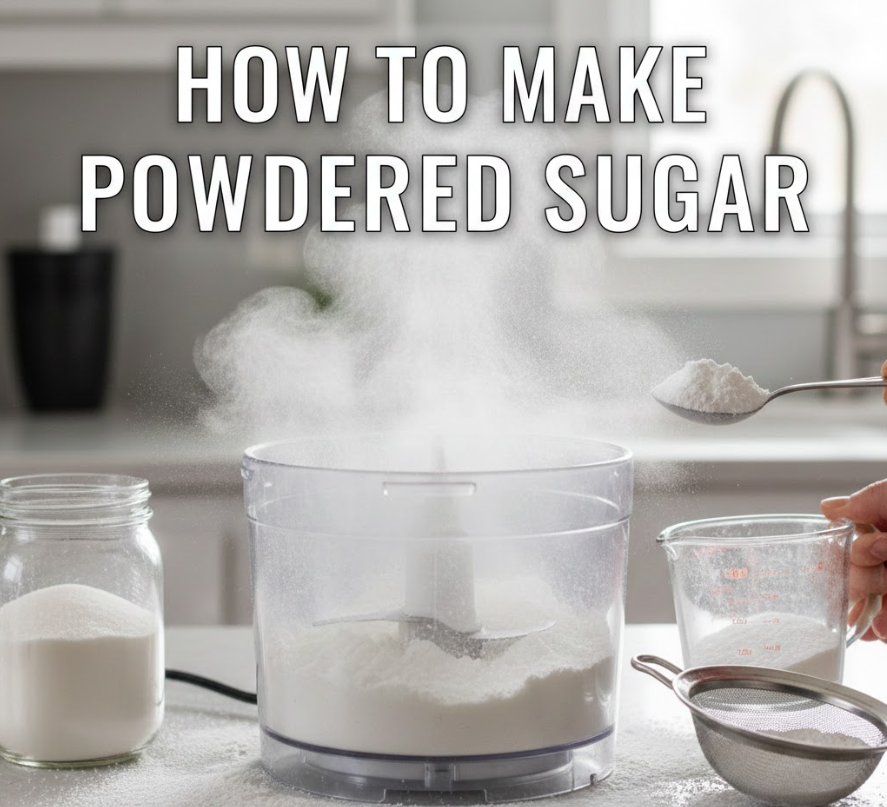

Powdered sugar, also known as confectioners’ sugar or icing sugar, is a finely ground sweetener essential in baking and desserts. Its smooth, powdery texture allows it to dissolve easily in liquids, making it perfect for icing, frosting, glazes, and dusting pastries. Whether you’re making delicate macarons, fluffy buttercream, or a simple powdered sugar glaze, knowing how to make powdered sugar is a valuable skill for any home baker or professional chef.
While powdered sugar is widely available in stores, making it at home can save time, money, and allow for customization, such as adjusting cornstarch content for specific recipes. Homemade powdered sugar can also be made from granulated sugar, cane sugar, or even natural sweeteners, allowing versatility in baking. In this guide, we’ll explore every method—from using a blender, food processor, or even hand methods—so you can consistently produce silky, high-quality powdered sugar.
How to Make Powdered Sugar at Home
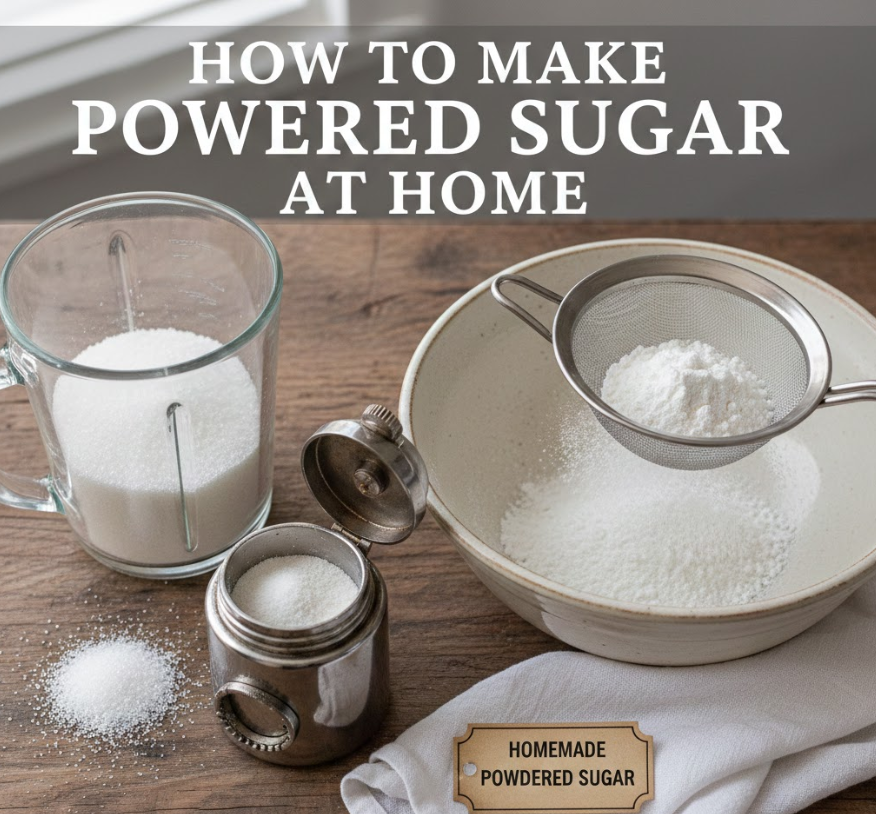
Making powdered sugar at home is surprisingly simple and requires only a few ingredients and tools.
• Start with granulated sugar: Use high-quality white sugar for best results.
• Use a blender or food processor: Pulse until sugar reaches fine, powdery consistency.
• Optional: Add cornstarch: 1 tablespoon per cup of sugar prevents clumping.
• Blend in short bursts: Prevents overheating and uneven texture.
• Check texture: Powder should be silky, without visible crystals.
• Sift before use: Removes lumps and ensures smooth incorporation into recipes.
• Store in airtight container: Keeps sugar dry and prevents hardening.
• Label container: Homemade powdered sugar may absorb moisture from the air.
• Use immediately for best results: Fresh sugar dissolves fastest in recipes.
• Experiment with sweeteners: Cane sugar or organic sugar can be used for flavor variations.
This method satisfies searches like how to make powdered sugar at home.
Also Read This:- How to Season a Cast Iron Skillet: Expert Tips for Perfect Non-Stick Cooking
How to Make Powdered Sugar from Granulated Sugar
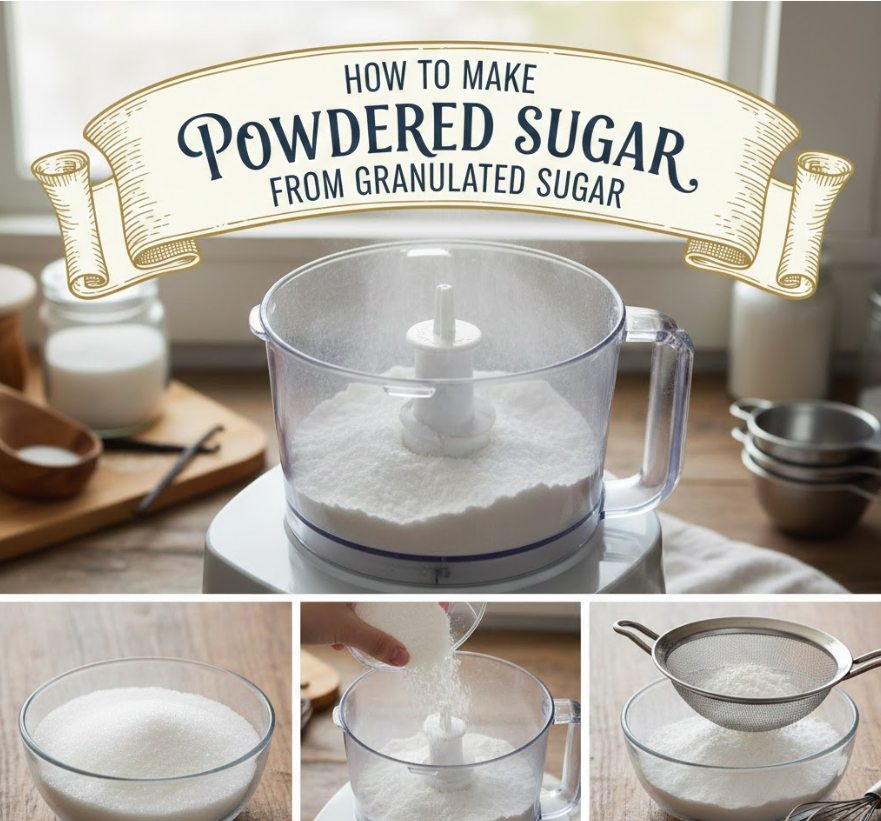
Granulated sugar is the base for powdered sugar and can be transformed using simple kitchen tools.
• Measure sugar accurately: One cup of granulated sugar produces roughly one cup of powdered sugar.
• Use a blender or spice grinder: Pulse until sugar is fine.
• Optional cornstarch addition: Prevents clumping in humid environments.
• Pulse in intervals: Prevents motor overheating and uneven texture.
• Sift after grinding: Ensures silky consistency.
• Use immediately or store airtight: Avoids moisture absorption.
• Can adjust texture: Blend longer for superfine sugar.
• Use for frostings and icings: Perfectly dissolves in buttercream and royal icing.
• Label homemade sugar: Helps differentiate from store-bought.
• Experiment with alternative sugars: Cane sugar, raw sugar, or coconut sugar works too.
Addresses searches for how to make powdered sugar from granulated sugar and how to make powdered sugar out of regular sugar.
Also Read This:- How to Pop Your Ears: Effective Methods for Immediate Relief
How to Make Powdered Sugar Without Cornstarch
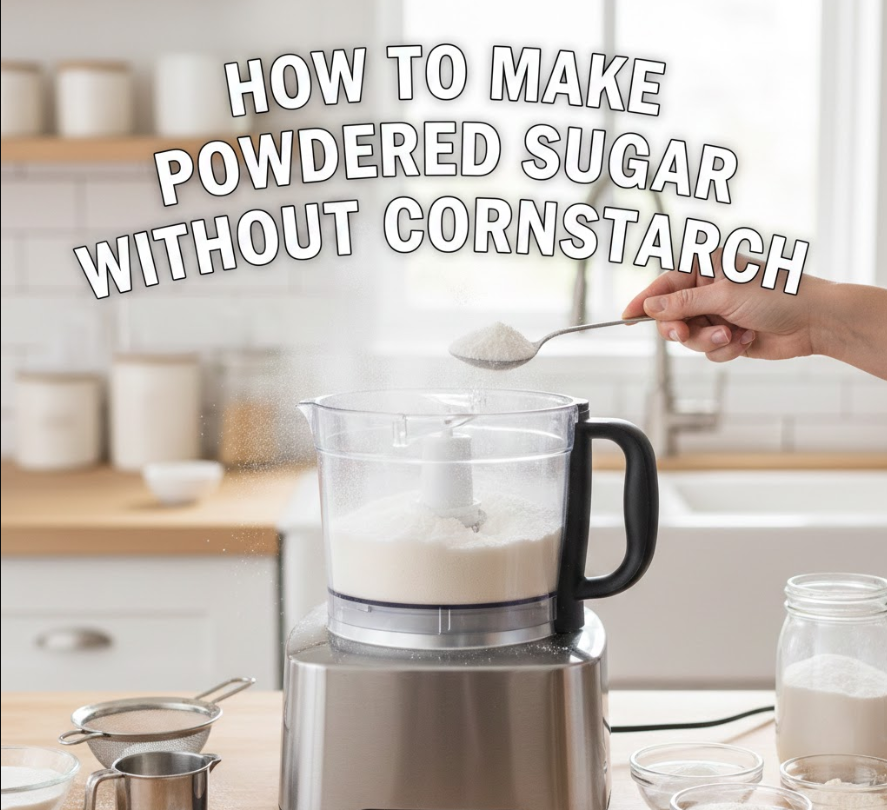
Some recipes require pure powdered sugar without any anti-caking agents.
• Use pure granulated sugar: Avoid pre-mixed store-bought sugar with cornstarch.
• Blend in food processor or blender: Process until powdery.
• Pulse carefully: Prevents overheating and moisture buildup.
• Sift after blending: Ensures no lumps remain.
• Store in airtight container: Avoid humidity to prevent clumping.
• Use immediately in icings: Maintains smooth texture.
• Optional natural anti-caking agents: Rice flour or arrowroot can be used if desired.
• Avoid adding liquid during grinding: Keeps texture dry.
• Label container: Important for recipe accuracy.
• Great for recipes sensitive to starch: Meringues and certain glazes benefit from starch-free sugar.
This satisfies searches like how to make powdered sugar without cornstarch.
Also Read This:- What Does a Game Publisher Do? A Complete and In-Depth Explanation
How to Make Powdered Sugar Icing
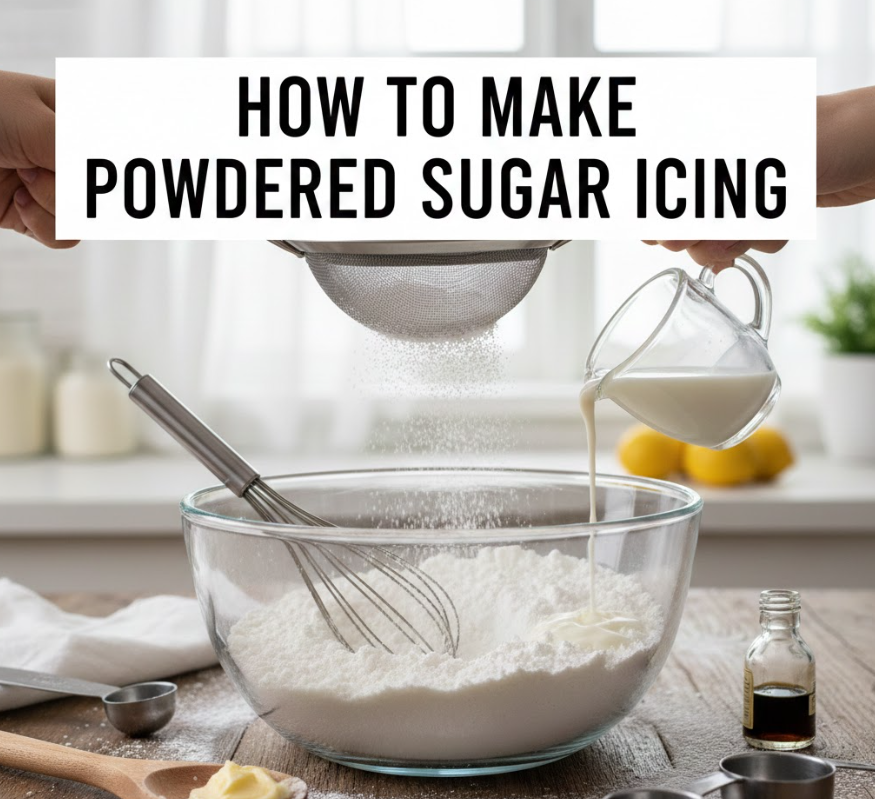
Powdered sugar is the base for smooth icing, perfect for cakes and cookies.
• Combine powdered sugar and liquid: Milk, water, or juice works.
• Add butter or shortening if desired: For creamy consistency.
• Whisk until smooth: No lumps remain.
• Adjust thickness: Add more sugar to thicken or liquid to thin.
• Flavoring optional: Vanilla, almond, or lemon extract enhances taste.
• Use immediately on baked goods: Avoid setting before application.
• Apply with spatula or piping bag: For precise decorating.
• Dust over pastries for finishing touch: Adds sweetness and visual appeal.
• Store leftover icing in refrigerator: Re-whisk before use.
• Avoid overmixing: Prevents grainy texture in delicate frostings.
Addresses searches like how to make powdered sugar icing and how to make powdered sugar frosting.
Also Read This:- What Does Media Upload Mean on Snapchat? A Complete User-Friendly Guide
How to Make Powdered Sugar Frosting
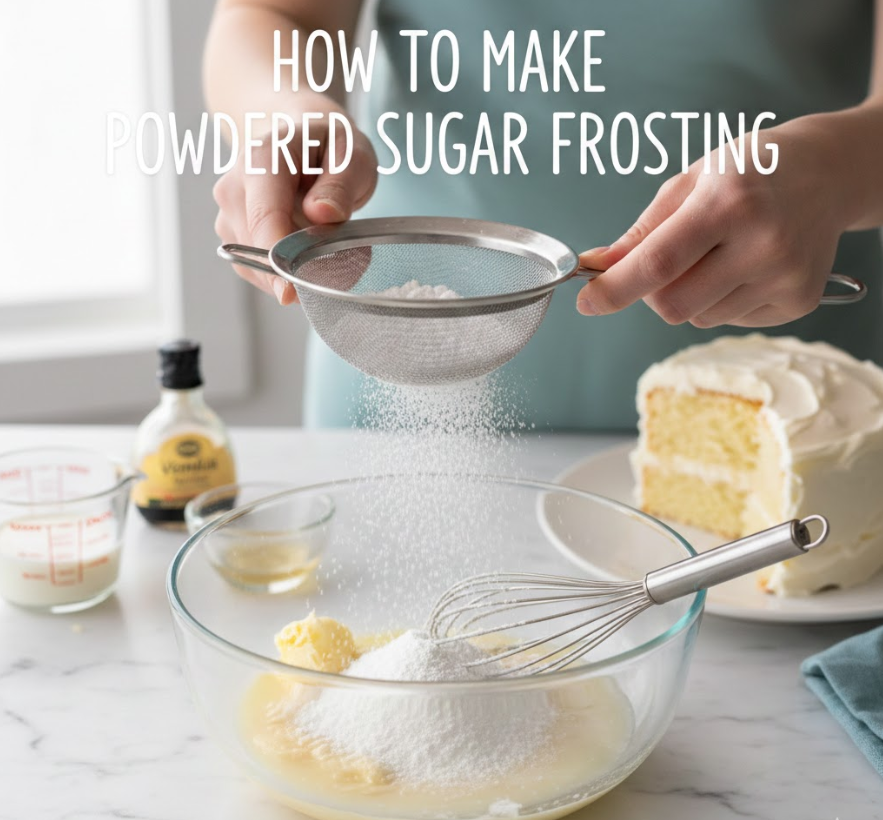
Frosting requires stable sugar that holds shape and blends with fat.
• Use homemade or store-bought powdered sugar: Sift for best results.
• Add butter or shortening: Creates creamy base.
• Whip until fluffy: Incorporates air for light texture.
• Add liquid sparingly: Milk or cream to adjust consistency.
• Flavor enhancements: Vanilla, cocoa, or fruit extracts.
• Use immediately or refrigerate: Maintains shape and texture.
• Pipe with pastry bag: For decorative applications.
• Smooth with offset spatula: For cakes and cupcakes.
• Avoid overbeating: Prevents separation of sugar and butter.
• Ideal for cake layers or cookies: Holds well at room temperature.
Covers queries like how to make powdered sugar frosting.
Also Read This:- What Does Eco Car Mean: A Complete and Practical Explanation
How to Make Powdered Sugar Glaze

Glazes are thinner than frosting and perfect for drizzling over baked goods.
• Combine powdered sugar and liquid: Milk, cream, or juice.
• Mix until smooth: No lumps remain.
• Adjust thickness: Add more sugar for thicker glaze or more liquid for thin glaze.
• Add flavoring: Vanilla, lemon, or almond extract enhances flavor.
• Apply immediately to warm pastries: Sets quickly and evenly.
• Use spatula or spoon for drizzle: Control application.
• Avoid over-mixing: Keeps glaze smooth.
• Store in airtight container: Use within a day for best results.
• Dust with additional powdered sugar: Optional finishing touch.
• Ideal for donuts, scones, and quick breads: Adds sweetness and shine.
This satisfies how to make powdered sugar glaze queries.
Also Read This:- How to Make Ramen Chips: A Step-by-Step Guide to Crispy Homemade Snacks
How to Make Powdered Sugar Without a Blender or Machine
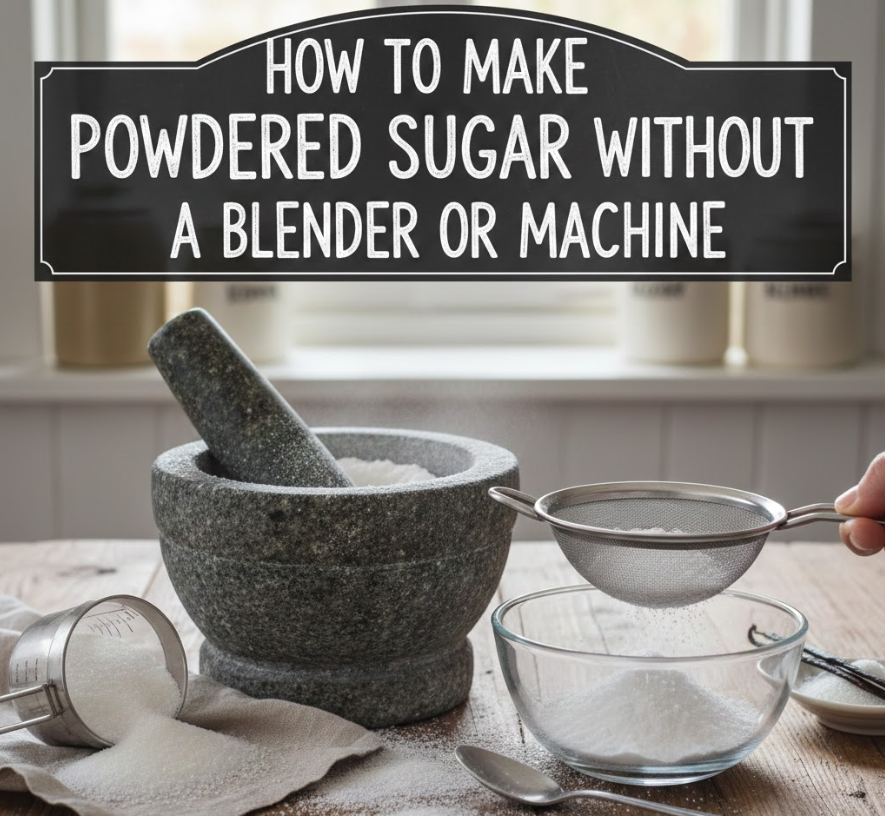
You can create powdered sugar manually without electrical appliances.
• Use a mortar and pestle: Grind sugar gradually into fine powder.
• Sift frequently: Ensures smooth, consistent texture.
• Add optional starch: Prevents clumping.
• Use rolling pin on a bag: Place sugar in a sealed bag and crush thoroughly.
• Grind small batches: Ensures uniform powder.
• Store airtight: Prevents moisture absorption.
• Label container: Identify homemade sugar.
• Use immediately in recipes: Fresh sugar blends best.
• Avoid lumps: Repeat grinding and sifting if necessary.
• Perfect for small quantities: Ideal for occasional baking without special equipment.
This addresses searches like how to make powdered sugar without blender and how to make powdered sugar without a machine.
Also Read This:- How to Make Ramen Chips: A Step-by-Step Guide to Crispy Homemade Snacks
How to Make Powdered Sugar With Flour
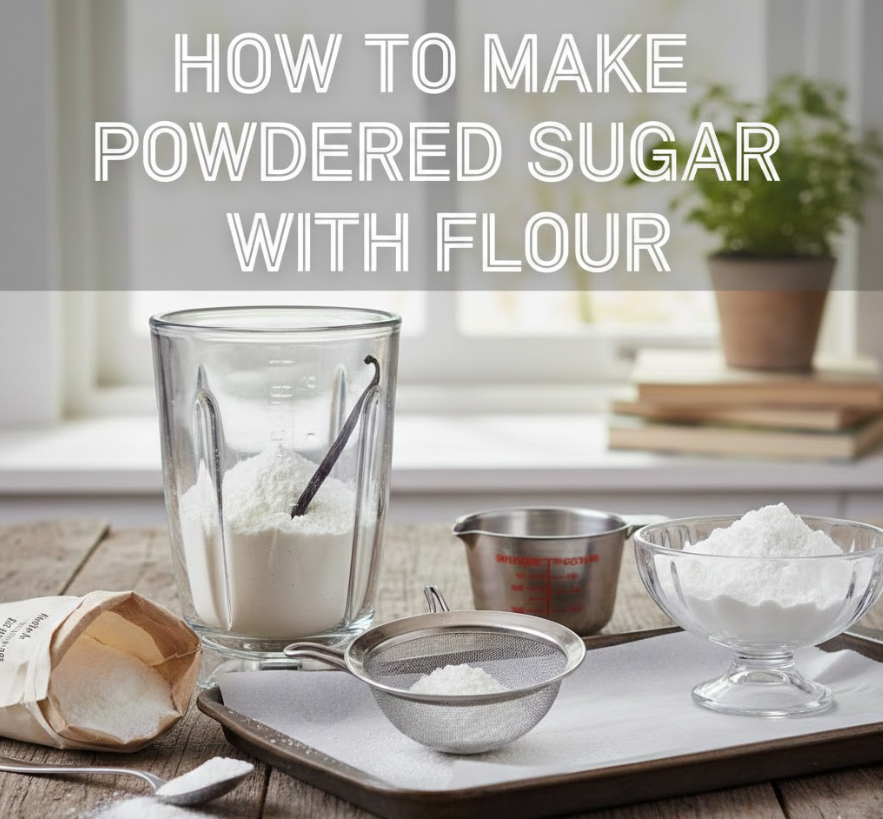
Flour can be used as a thickening agent or stabilizer in powdered sugar for specific recipes.
• Combine granulated sugar with flour: 1 tablespoon flour per cup sugar.
• Grind or sift together: Ensures even distribution.
• Prevents clumping: Especially in humid conditions.
• Use in baked goods: Stabilizes frostings and fillings.
• Optional flavoring: Vanilla or almond extract.
• Store airtight: Maintains texture.
• Avoid overuse: Too much flour affects sweetness and flavor.
• Blend small batches: Maintains fine texture.
• Label container: For recipe accuracy.
• Ideal for icing and cake decoration: Keeps smooth consistency.
Also Read This:- How to Make an Outdoor Fireplace: A Complete DIY and Design Guide
How to Make Powdered Sugar From Cane Sugar
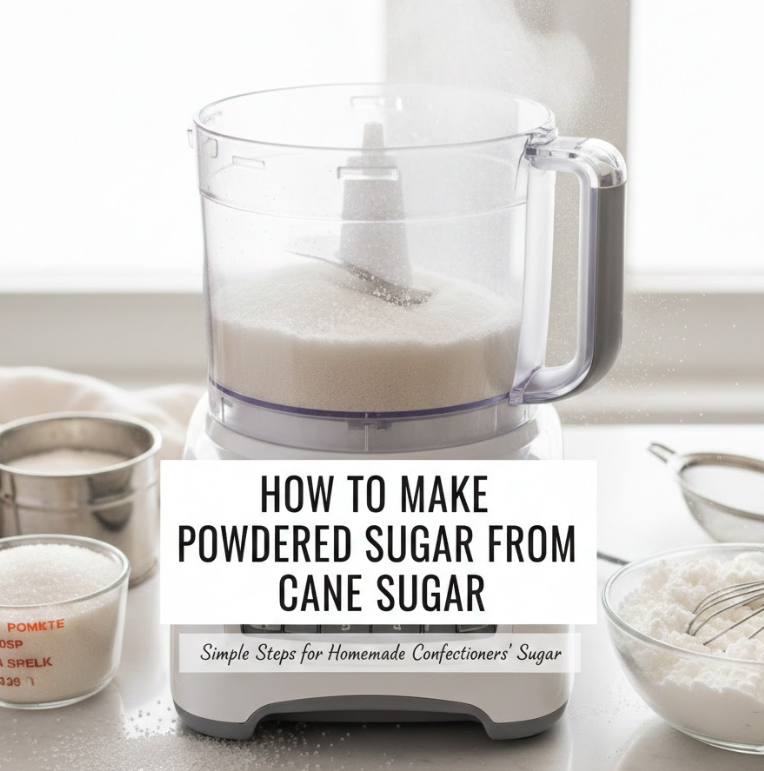
Cane sugar produces slightly different flavor and texture compared to refined white sugar.
• Measure cane sugar: Equivalent to desired powdered sugar amount.
• Blend in food processor or spice grinder: Until fine.
• Optional cornstarch: Prevents clumping.
• Sift after grinding: Smooth texture ensured.
• Use for glazes, icings, frostings: Adds caramel-like flavor.
• Store airtight: Keeps dry and free-flowing.
• Adjust thickness in recipes: Blend longer for superfine texture.
• Works in frostings and glaze: Slightly richer taste.
• Label for identification: Avoid confusion with regular powdered sugar.
• Perfect for homemade desserts: Adds authentic flavor.
Conclusion: Mastering How to Make Powdered Sugar
Making powdered sugar at home is versatile, cost-effective, and allows customization for all baking needs. Whether using granulated sugar, cane sugar, or flour-stabilized versions, you can create icing, frosting, glazes, or dusted pastries effortlessly. Understanding blending techniques, optional starch use, and storage ensures smooth, lump-free powdered sugar every time.
FAQs: How to Make Powdered Sugar
Q: Can I make powdered sugar without cornstarch?
A: Yes, blend granulated sugar finely and sift for best results.
Q: Can I make powdered sugar by hand?
A: Yes, using mortar and pestle or rolling pin with sealed bag.
Q: What can I use powdered sugar for?
A: Frosting, glaze, icing, dusting, or in desserts.
Q: Can I make powdered sugar from cane sugar?
A: Yes, grind finely and optionally add starch for stability.
Q: How long does homemade powdered sugar last?
A: Up to 3–6 months stored airtight in a dry environment.
Visit For More Information go to:- Virtualsmagazine