
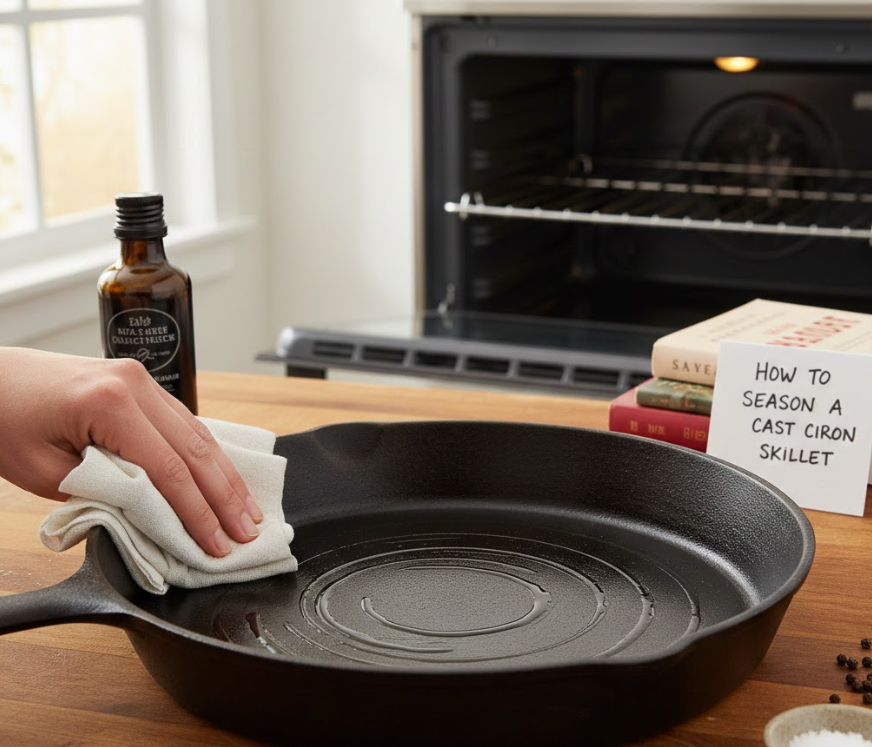

Cast iron skillets are legendary for their durability, heat retention, and ability to create a natural non-stick surface when seasoned correctly. Seasoning a cast iron skillet not only enhances cooking performance but also prevents rust, improves flavor development, and extends the life of this classic kitchen tool. Whether you are seasoning a brand-new skillet or maintaining one you already own, understanding the different oils, techniques, and methods is essential. This guide provides a complete roadmap, covering seasoning for the first time, stovetop techniques, oil variations, post-wash maintenance, and specialty methods recommended by manufacturers like Lodge. By following these steps, you can transform your cast iron skillet into a reliable, long-lasting cooking companion.
How to Season a Cast Iron Skillet for the First Time
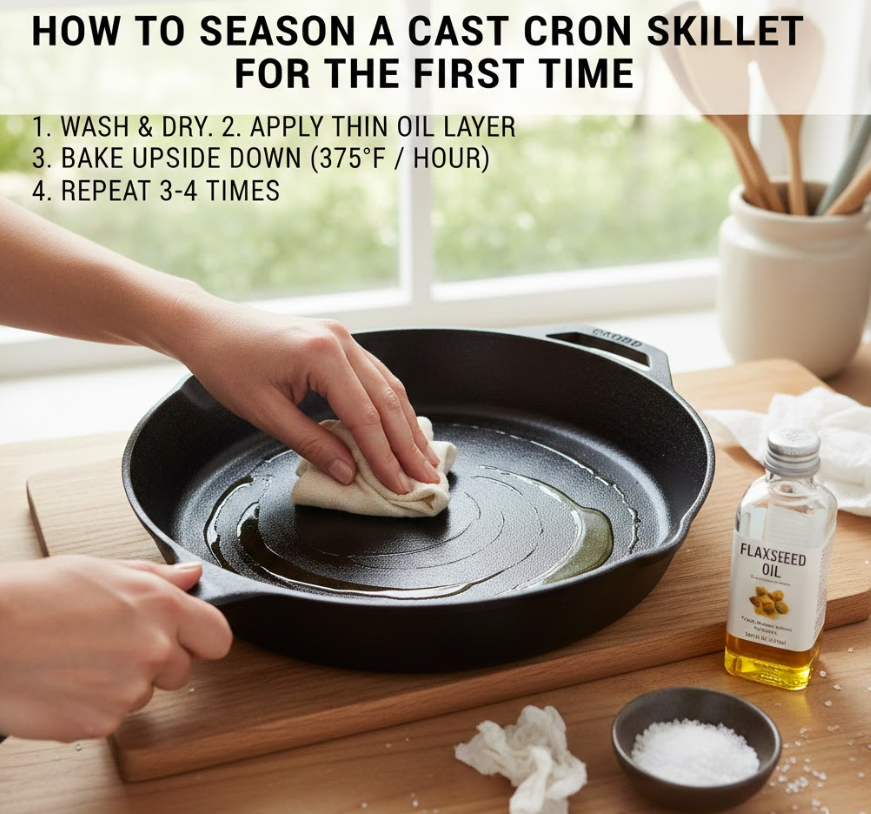
Seasoning your cast iron skillet for the first time creates the foundation for a durable, non-stick surface. It involves coating the skillet with a thin layer of oil and heating it to form a polymerized surface.
- Clean thoroughly: Remove any factory coating or residue by scrubbing with warm water and mild soap. Rinse and dry completely to prevent rust.
- Choose the right oil: High-smoke point oils like flaxseed, grapeseed, or avocado oil work best for the initial seasoning because they form a hard, polymerized layer.
- Apply thin coating: Use a paper towel to apply a very thin, even layer of oil all over the skillet, including the handle and underside. Excess oil leads to sticky surfaces instead of a smooth layer.
- Bake for polymerization: Place the skillet upside down in a preheated oven at 450–500°F for an hour. Polymerization occurs as the oil bonds with the iron surface.
- Cool naturally: Allow the skillet to cool in the oven to avoid sudden temperature shocks that could warp the iron.
- Repeat the process: For best results, repeat seasoning 2–3 times to build a strong, durable non-stick coating for long-term use.
How to Season a Cast Iron Skillet on the Stove
Stovetop seasoning is an alternative for those without an oven or for quick touch-ups. This method heats the oil directly on the skillet surface to achieve polymerization.
- Preheat skillet: Place the skillet over medium heat for a few minutes to open the pores of the iron.
- Apply a thin layer of oil: Use high-smoke point oils like canola, avocado, or vegetable oil. Wipe off excess to prevent sticky patches.
- Heat until smoking: Allow the oil to lightly smoke. The smoke indicates that polymerization is beginning.
- Rotate the pan: Move the pan around on the stove to ensure even heating, preventing uneven seasoning.
- Cool gradually: Remove from heat and let it cool naturally. Avoid washing immediately, as the heat helps bond the oil to the iron.
- Repeat for durability: Repeat the oiling and heating process 2–3 times to create a consistent, hard coating that enhances non-stick performance.
Also Read This:- How to Pop Your Ears: Effective Methods for Immediate Relief
How to Season a Cast Iron Skillet on the Stovetop
Stovetop seasoning on the stovetop is ideal for spot treatment or maintaining your skillet after use. It allows precise control over the amount of oil and heat applied.
- Select your skillet carefully: Ensure the pan is dry and free of rust or debris. Moisture interferes with oil bonding.
- Choose the right oil: Avocado oil or flaxseed oil is preferred due to high smoke points and strong polymerization properties.
- Apply a thin coating: Spread a uniform layer over the cooking surface and the handle. Thin layers prevent sticky residues.
- Heat evenly: Place on medium-high heat, moving the pan slightly to allow even exposure. Smoke indicates oil is bonding.
- Cool properly: Allow the skillet to cool on a heatproof surface; avoid quenching with water.
- Maintain seasoning: Repeat as needed, especially if you notice dullness, uneven sheen, or food sticking.
Also Read This:- What Does a Game Publisher Do? A Complete and In-Depth Explanation
How to Season a Cast Iron Skillet with Avocado Oil
Avocado oil is an excellent choice for cast iron seasoning due to its very high smoke point and smooth polymerization.
- Clean skillet: Remove any old seasoning or residue before applying oil. A clean surface ensures strong adhesion.
- Apply oil sparingly: A thin layer prevents sticky buildup and allows for a glossy finish.
- Heat to polymerize: Place the skillet upside down in the oven at 475–500°F. Smoke indicates polymerization.
- Repeat layers: Multiple thin layers build a durable coating capable of resisting rust and sticking.
- Post-bake care: Allow the pan to cool in the oven before touching. Handling too soon can affect the coating.
- Maintenance: Regular use with fatty foods and occasional touch-ups keeps the skillet seasoned long-term.
Also Read This:- What Does Media Upload Mean on Snapchat? A Complete User-Friendly Guide
How to Season a Cast Iron Skillet with Olive Oil
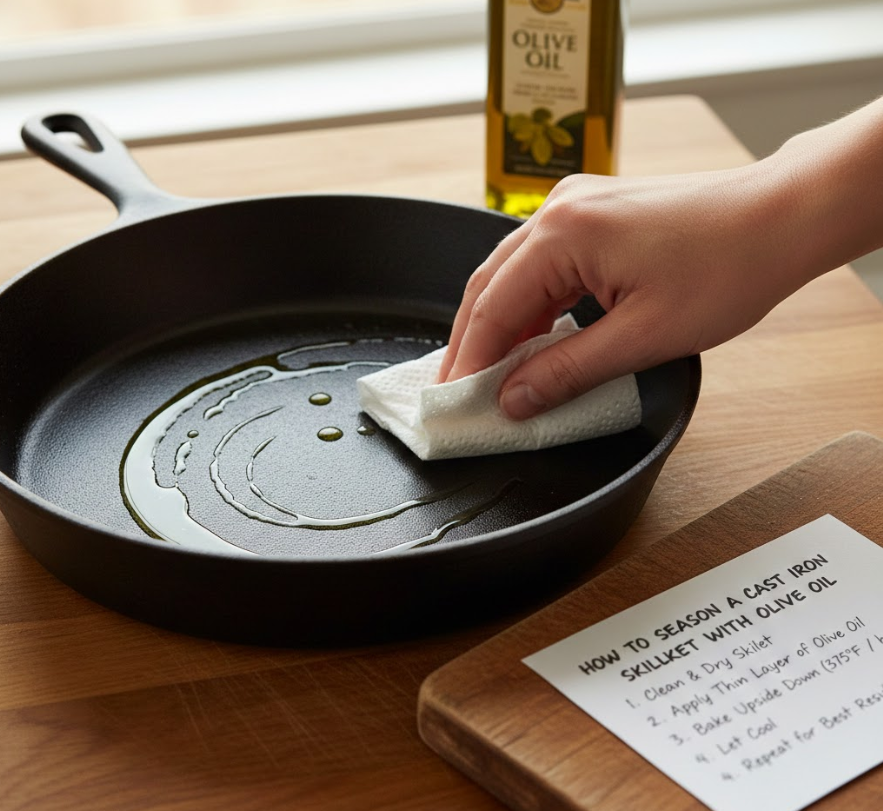
Olive oil is a popular option for seasoning, though its lower smoke point requires careful handling.
- Choose extra virgin or light olive oil: Light olive oil is preferred due to a higher smoke point.
- Clean the pan: Remove debris and dry thoroughly. Moisture interferes with polymerization.
- Apply a thin layer: Use a cloth or paper towel to coat the surface evenly. Avoid pooling.
- Bake at moderate temperature: 400–450°F is ideal for olive oil to prevent smoking excessively.
- Cool naturally: Let the skillet cool slowly to strengthen the new seasoning layer.
- Repeat for optimal results: Multiple light coats improve non-stick surface quality and durability.
Also Read This:- What Does Eco Car Mean: A Complete and Practical Explanation
How to Season a Cast Iron Skillet Without an Oven
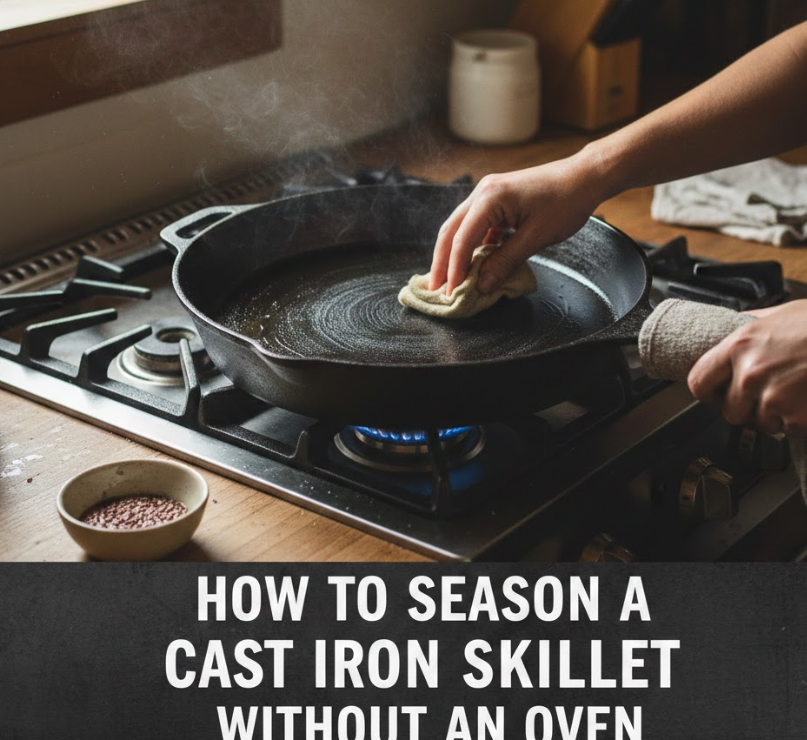
For those without ovens, stovetop or pan-frying methods can effectively season cast iron.
- Heat the skillet gently: Preheat over medium heat to expand iron pores.
- Apply oil thinly: Use high-smoke point oils like canola, avocado, or vegetable oil for a smooth coating.
- Allow oil to smoke lightly: This indicates polymerization has started. Avoid overheating.
- Move oil across the pan: Swirl oil around to coat evenly.
- Cool gradually: Do not rinse immediately; heat helps bind the oil to the surface.
- Repeat process: Multiple coatings build a strong, smooth non-stick layer without an oven.
Also Read This:- What Does Eco Car Mean: A Complete and Practical Explanation
How to Season a Cast Iron Skillet with Vegetable Oil
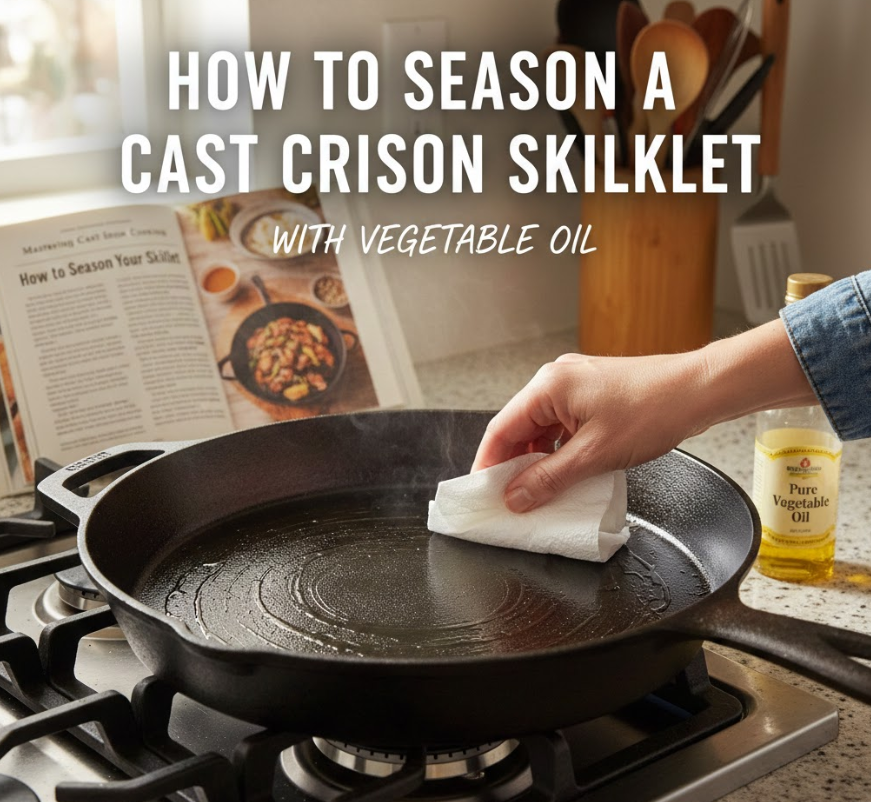
Vegetable oil is accessible and effective for cast iron seasoning when applied correctly.
- Clean and dry skillet: Any moisture or residue interferes with oil adhesion.
- Apply a thin coat: Use a paper towel or cloth to spread oil evenly.
- Heat to smoking point: Place on stove or oven to allow polymerization.
- Rotate for uniformity: Ensure every part of the skillet is exposed to heat.
- Cool naturally: Slow cooling improves durability.
- Repeat layers: Multiple applications enhance non-stick properties and prevent rust.
Also Read This:- How to Make Ramen Chips: A Step-by-Step Guide to Crispy Homemade Snacks
How to Season a Cast Iron Skillet with Bacon Grease
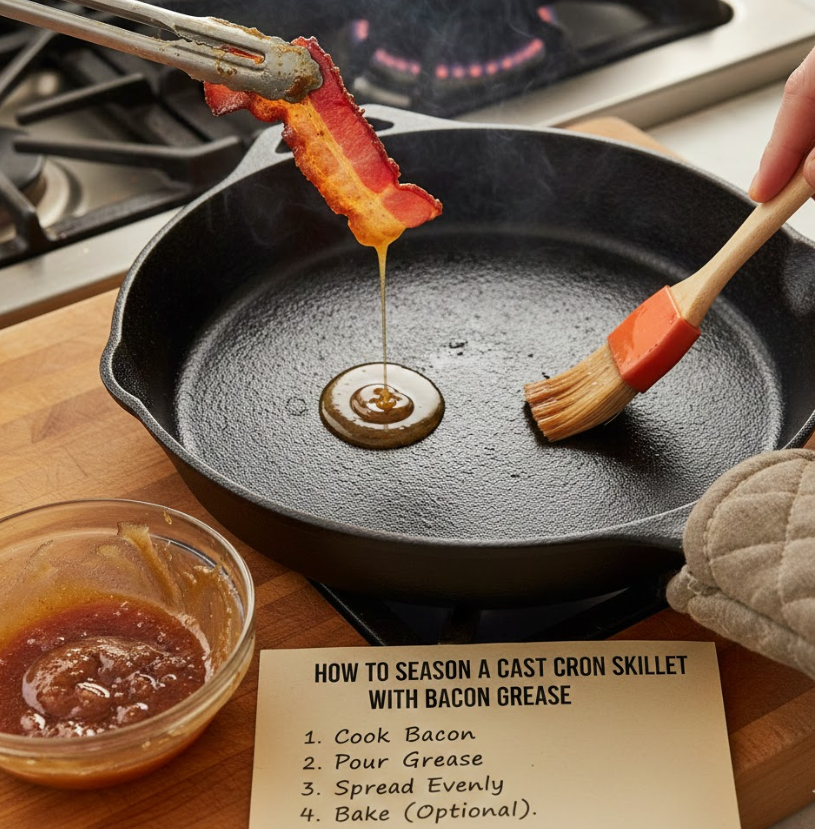
Bacon grease adds flavor while creating a durable, natural non-stick surface.
- Use rendered grease: Ensure it’s free from food particles.
- Clean skillet: Remove any moisture or old seasoning debris.
- Apply a thin layer: Coat the pan lightly; thick layers become sticky.
- Heat slowly: Warm the skillet until the grease lightly smokes.
- Cool gradually: Allow the skillet to cool on a heatproof surface.
- Repeat if needed: Repeated seasoning enhances both non-stick performance and flavor infusion.
Also Read This:- How to Make an Outdoor Fireplace: A Complete DIY and Design Guide
How to Season a Cast Iron Skillet with Lard
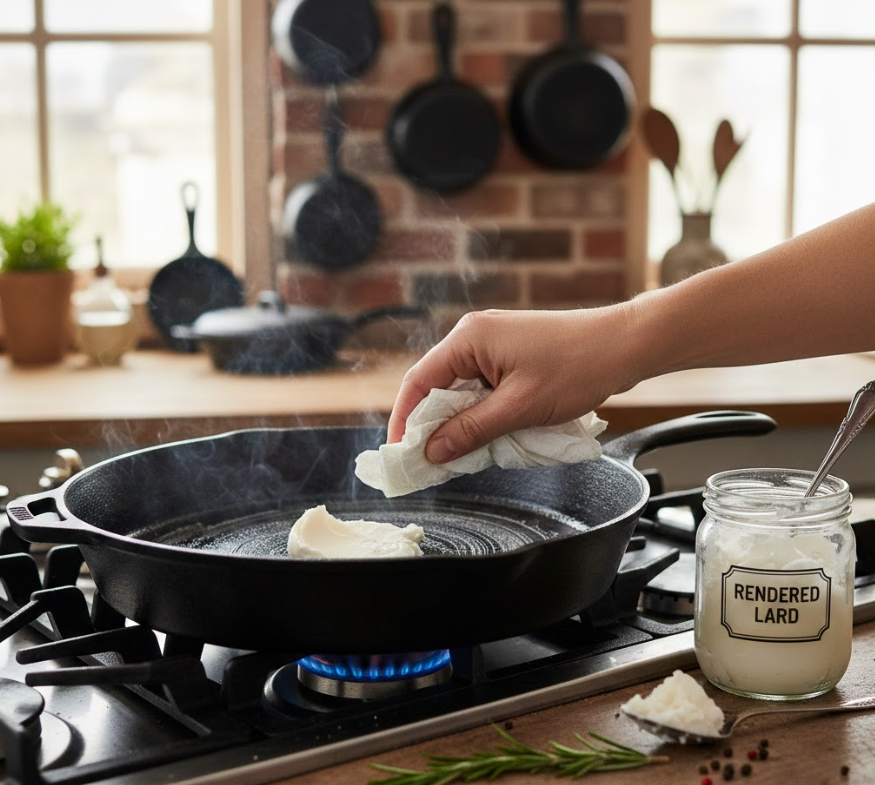
Lard is a traditional option for seasoning, favored for its polymerization properties and long-lasting coating.
- Select high-quality lard: Rendered lard works best. Avoid cheap or heavily processed fats.
- Clean and dry skillet: Essential for adhesion and rust prevention.
- Apply thin coat: Spread evenly across the skillet surface.
- Heat to smoke lightly: Polymerization occurs as lard reaches smoke point.
- Cool gradually: Slow cooling solidifies the new layer.
- Repeat layers for durability: Multiple thin layers improve non-stick and longevity.
Also Read This:- How to Make an Outdoor Fireplace: A Complete DIY and Design Guide
Tips for Maintaining a Cast Iron Skillet
- Avoid harsh soaps or scrubbing that removes seasoning.
- Dry thoroughly after washing to prevent rust.
- Apply a thin oil coat after each use for ongoing maintenance.
- Avoid storing acidic foods in unseasoned areas.
- Periodically perform full seasoning cycles to restore the non-stick surface.
FAQs
Q1: Can I season a cast iron skillet with olive oil?
Yes, but use light olive oil due to its higher smoke point for optimal polymerization.
Q2: How often should I season my skillet?
New skillets require multiple initial seasoning layers; afterward, touch-ups after washing or heavy use are recommended.
Q3: Is it necessary to use the oven?
No, stovetop seasoning is effective for small touch-ups or if you don’t have an oven.
Q4: Can I use bacon grease or lard?
Yes, both are traditional methods that create durable, flavorful seasoning.
Visit For More Information go to:- Virtualsmagazine